COMMENTARY:
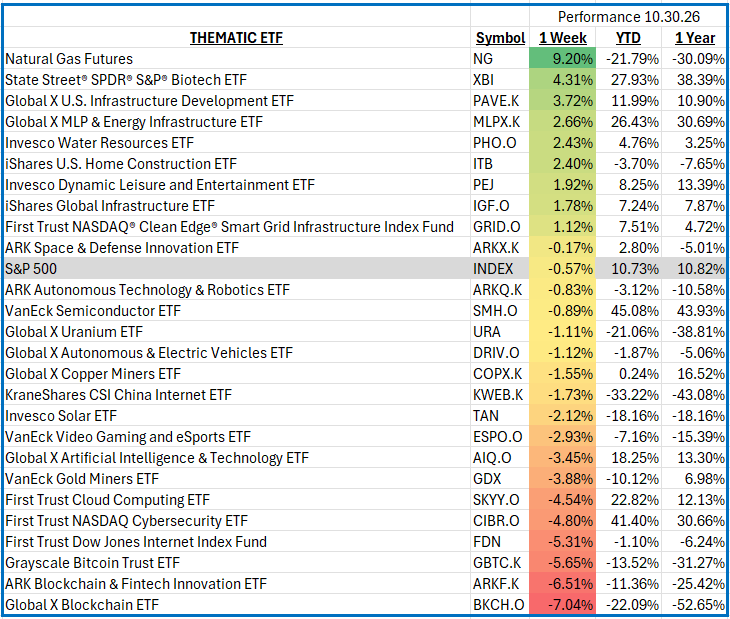
The S&P 500 declined 0.57% for the week ending October 30, as disappointing technology earnings and concerns about artificial intelligence (AI) investment returns pressured growth-oriented equities. The Federal Reserve held interest rates steady, while economic data showed third-quarter GDP growth of 3.4% and inflation remaining elevated. Investor attention increasingly focused on whether substantial AI infrastructure spending will translate into sustainable corporate earnings. These developments contributed to a rotation away from select technology and cryptocurrency investments toward biotechnology, energy-related investments, and other areas offering distinct growth opportunities.
Energy and Natural Resources: Natural gas futures led thematic performance, rising 9.20%, substantially outperforming the S&P 500 by 9.77 percentage points. Expectations surrounding seasonal heating demand, weather patterns, and natural gas storage levels can influence prices as winter approaches. Energy infrastructure companies also attracted attention as electricity consumption from data centers and industrial facilities continues to grow. Meanwhile, gold-mining investments faced pressure as precious metals weakened, demonstrating the divergent performance within natural resources. Investors continue to balance near-term commodity price movements against longer-term demand for energy and critical materials.
Biotechnology and Healthcare Innovation: Biotechnology gained 4.31%, outperforming the broader market by 4.88 percentage points. Strength among companies developing treatments for serious diseases supported the advance. Regeneron Pharmaceuticals rallied following encouraging developments, while CareDx surged after reporting strong results and improving its sales outlook. Investors continued to assess clinical-trial progress, regulatory milestones, and the commercial potential of innovative therapies. Despite ongoing uncertainty surrounding healthcare costs and drug pricing, company-specific developments provided important catalysts for biotechnology performance.
Infrastructure and Electrification: Infrastructure-related investments advanced 3.72%, outperforming the S&P 500 by 4.29 percentage points. Companies supporting construction, engineering, electrical equipment, and transportation infrastructure benefited from continued interest in domestic investment and expanding power requirements. Quanta Services and other electrical infrastructure providers represent potential beneficiaries of grid modernization and data-center construction. However, the broader AI investment debate remains relevant because infrastructure development requires substantial capital and sustained demand to justify current valuations.
Financial Technology and Blockchain: Financial technology and blockchain investments lagged considerably. Blockchain-related investments declined 7.04%, while financial technology fell 6.51%, underperforming the S&P 500 by 6.47 and 5.94 percentage points, respectively. Bitcoin weakness pressured cryptocurrency-related companies, including Strategy and Coinbase, while Robinhood and other financial technology businesses faced broader growth-stock volatility. Reports of a substantial cryptocurrency theft at Binance further unsettled digital-asset investors, reinforcing concerns about security and market stability.
Artificial Intelligence and Emerging Technologies: Semiconductor, cloud-computing, cybersecurity, robotics, and autonomous-technology investments experienced uneven performance as investors reassessed AI spending and profitability. Intel’s disappointing outlook and Alphabet’s earnings concerns intensified volatility, while Microsoft demonstrated continued cloud growth. These contrasting results highlighted the importance of distinguishing companies monetizing AI investments from those still building expensive infrastructure.
Overall, thematic performance favored biotechnology, natural gas, and infrastructure while blockchain and financial technology struggled. Investors will continue weighing economic resilience against valuation concerns and the evolving commercial returns from emerging technologies.