
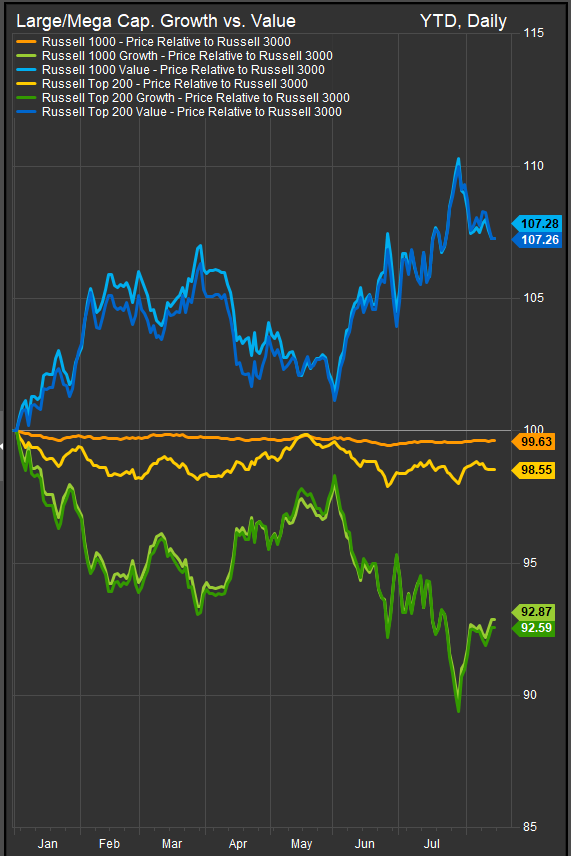
The late-July turn toward Growth is now visible in thematic ETF performance, but it does not look like a simple return to the first-half momentum trade. The Growth/Value relative chart still shows Value holding a substantial YTD lead: Russell 1000 and Top 200 Value remain roughly 7% ahead of the Russell 3000 on a relative basis, while comparable Growth indexes remain about 7% behind. But those Growth relatives have turned sharply higher from their late-July lows.
Thematic ETF performance confirms the pivot. Vanguard Growth (VUG) has gained 4.16% over one month versus 3.51% for Vanguard Value (VTV), and the spread has accelerated over the latest week: VUG +5.32% versus VTV +3.23%. Vanguard Information Technology (VGT) gained 8.70% in the latest week. The bigger story, however, is underneath those broad style indexes. Software, cloud computing and cybersecurity—not semiconductors—have been the clearest beneficiaries of the Growth rebound.
Growth Has Pivoted, but Momentum Hasn’t
July’s selloff was intensified by positioning. JPMorgan estimated that hedge funds experienced one of their most extreme de-grossing episodes outside 2020 and 2022, with crowded technology and momentum positions responsible for substantial losses. Tech positioning remains elevated, but much of the forced leverage has now been removed. That created room for Growth to recover just as fundamentals improved. Microsoft’s late-July results showed Azure revenue growth of 43%, easing concerns that massive AI infrastructure spending was failing to generate corresponding revenue. Similar strength across hyperscaler cloud businesses helped move the conversation from AI spending toward AI monetization.
Then macro conditions became more supportive. July CPI increased only 0.1% month over month and core CPI rose 0.2%, while headline inflation eased to 3.4%. Producer prices were unchanged in July versus expectations for an increase, reinforcing expectations that the Fed may remain on hold. The result is a Growth rally supported by cleaner positioning, stronger earnings and a less threatening rate outlook.
Thematic Returns Say Software Is the New Leadership Trade
The one-month data are striking. The measurement period begins before the late-July Growth pivot, so it is not a pure post-pivot return series. That actually makes the strength of the current leaders more notable.
| ETF | Theme | 1-Month Return | 1-Month Flow |
| WCLD | Cloud Computing | +21.05% | +$30M |
| CLOU | Cloud Computing | +20.74% | +$80M |
| SKYY | Cloud Computing | +20.66% | −$37M |
| GDX | Gold Miners | +20.31% | +$375M |
| SILJ | Junior Silver Miners | +19.24% | +$13M |
| KOPX | Copper Miners | +15.02% | +$87M |
| IGV | Software | +14.65% | −$1.08B |
| XSW | Software & Services | +14.32% | N/A |
| BUG | Cybersecurity | +12.16% | +$170M |
| AWAY | Travel Technology | +11.71% | +$8M |
Source: FactSet Research Systems Inc.
Cloud ETFs occupy the top three positions. Across the nine software and cybersecurity funds in the dataset, the average one-month return is approximately 15%. Semiconductors tell a very different story. The seven semiconductor ETFs averaged only about 0.2% over one month. SMH gained just 0.60%, SOXX lost 0.52% and FTXL declined 0.75%. This is critical to understanding the factor shift. Growth is recovering faster than the old Momentum trade. Investors are rewarding cloud, software and cybersecurity businesses that can potentially monetize the AI investment cycle without carrying the same capital intensity and positioning baggage as the semiconductor complex.
Cash Flow Is Still Working
The rally also retains a pronounced Quality component. VictoryShares Free Cash Flow ETF (VFLO) gained 12.34% over one month, while COWZ advanced 9.84% and CALF gained 9.63%. By contrast, broad Momentum exposure remains subdued: SPMO gained only 2.00% and MTUM just 0.44%. That argues against describing the current move as an indiscriminate high-beta rally. The stronger signal is Quality Growth—companies with accelerating revenue, strong margins and current cash generation. The style pivot is occurring, but investors have not returned to Growth-at-any-price.
Flows Tell a More Cautious Story
Performance leadership and investor flows are not yet saying the same thing.
| ETF | Theme | 1-Month Inflow | 1-Month Return |
| GLD | Gold | +$2.82B | +8.67% |
| SMH | Semiconductors | +$1.28B | +0.60% |
| SLV | Silver | +$946M | +11.50% |
| SOXQ | Semiconductors | +$496M | +1.03% |
| GDX | Gold Miners | +$375M | +20.31% |
| AMLP | MLPs | +$329M | +3.14% |
| IBB | Biotechnology | +$286M | +4.95% |
| CIBR | Cybersecurity | +$228M | +11.28% |
Source: August 14 ETFSector.com thematic ETF dataset.
The largest inflows are going to precious metals and selected semiconductor funds, not the cloud ETFs delivering the largest returns. Natural-resource ETFs collectively attracted approximately $3.88 billion over one month, while averaging nearly 13% returns. Reuters similarly reports renewed demand for gold and precious-metal funds as investors balance improving inflation data against geopolitical and fiscal uncertainty. Software presents almost the opposite picture. Despite producing the strongest category returns, software ETFs collectively experienced roughly $500 million of net redemptions, primarily because IGV lost more than $1 billion.
That divergence may be important. Prices have pivoted toward Growth faster than asset allocation has. If software inflows begin following software performance, the Growth rotation would gain another important source of confirmation.
Semiconductors Remain the Battleground
Chip flows reveal another interesting split. SMH attracted $1.28 billion over one month and SOXQ nearly $500 million, but SOXX and FTXL experienced large withdrawals. Across the semiconductor category, aggregate flows were approximately flat. That looks more like investor repositioning within semiconductors than a wholesale return to the chip trade. The July collapse followed extraordinary crowding and leverage. Reuters reported that the Philadelphia Semiconductor Index fell more than 20% from its June peak as investors questioned AI capital-spending sustainability. The subsequent recovery in Growth has therefore migrated toward less-crowded parts of Technology.
What Would Make the Growth Pivot Sustainable?
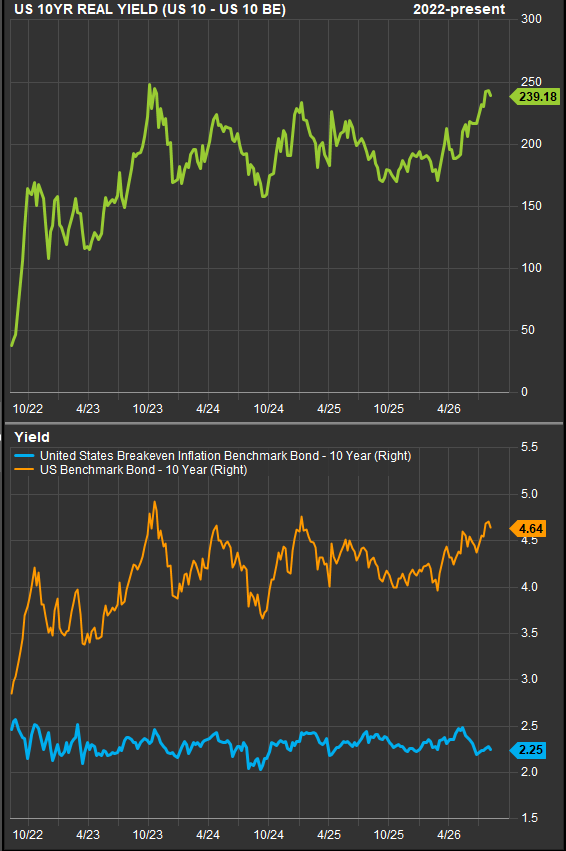
The remaining obstacle is the discount rate. As of August 13, the Treasury’s 10-year real yield was still 2.39%, while the 30-year real yield was 2.97%. Both have eased modestly, but they remain historically restrictive. Reuters estimates that Alphabet, Amazon and Meta have already issued nearly $220 billion of bonds in 2026 as AI investment competes with enormous government financing needs. That competition for capital could keep real yields structurally high even if inflation moderates. For Growth to take durable leadership from Value, three things need to continue occurring together: core inflation must remain contained, long-term real yields must move lower, and AI earnings need to validate the investment cycle.
The Middle East remains an important risk to that sequence. Renewed tension around the Strait of Hormuz has recently pushed oil higher again, demonstrating how quickly energy can reintroduce inflation pressure.
The Bottom Line
The thematic data provide stronger evidence that the late-July Growth pivot is becoming fundamental rather than purely technical. But the leadership has changed. The first-half AI trade was dominated by semiconductors and infrastructure. The current rebound is being led by cloud computing, software, cybersecurity and cash-generative Growth, while semiconductor performance remains uneven. At the same time, extraordinary returns and inflows into gold, silver and mining ETFs show that investors have not abandoned inflation, fiscal or geopolitical hedges. That combination tells us the market is rotating toward Growth, not embracing an unrestricted risk-on regime.
Value still owns the YTD relative trend. Momentum has not fully recovered. Quality remains powerful. But if long-term real yields break lower and software flows begin catching up with software performance, the late-July turn could become something considerably more important: a durable shift from Value leadership toward Quality Growth.
Sources: August 14 ETFSector.com thematic ETF return and flow data; supplied Russell Growth/Value relative-performance chart; U.S. Treasury; Bureau of Labor Statistics; Reuters; JPMorgan; Microsoft earnings reporting.
Disclaimer: This commentary is for informational purposes only and does not constitute investment advice. ETF prices, flows, factor exposures and market conditions can change. Investors should consider objectives, risks, charges and expenses before investing.
