
March 22, 2026
Thematic investing in 2026 has entered a more mature phase. The latest source material on year-to-date ETF flows shows a market that remains deeply engaged with structural growth narratives—but far more selective in how it expresses them. What has emerged is not a broad “risk-on” embrace of themes, but a disciplined reallocation toward cash-generative leadership, infrastructure exposure, and quality-oriented equity income, alongside a more cautious stance on crowded or macro-sensitive trades.
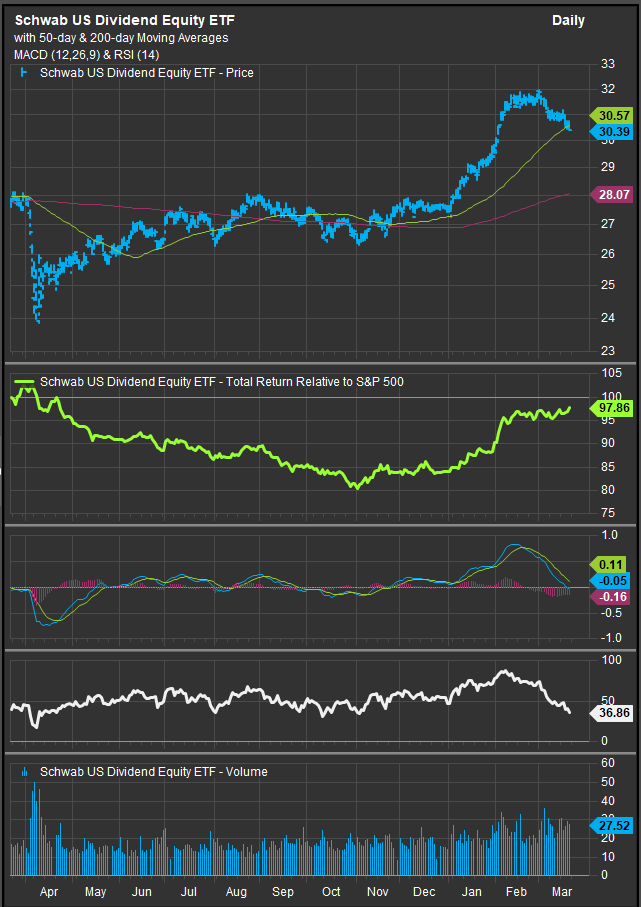
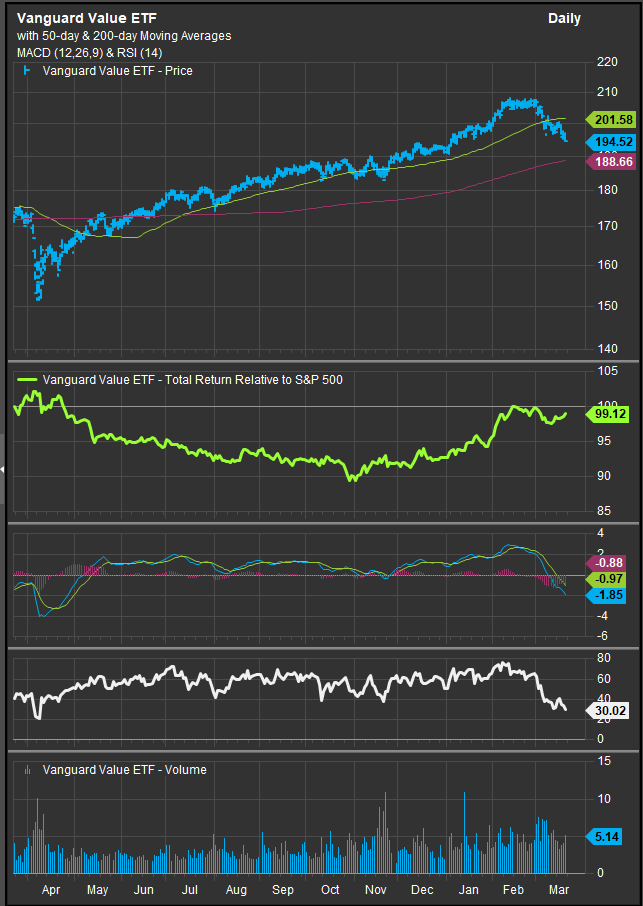
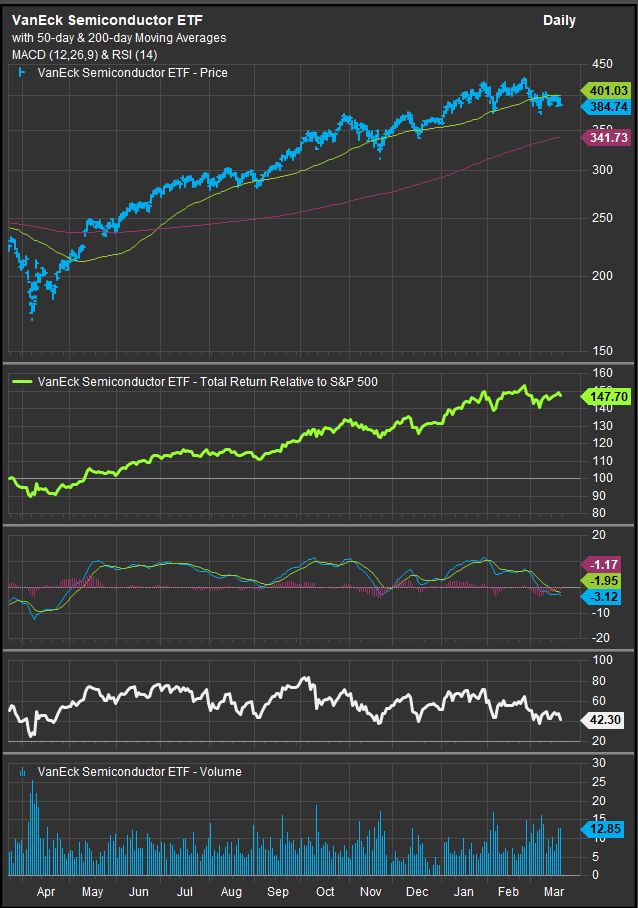
At the top of the allocation spectrum, inflows have been dominated by dividend growth, broad market exposure, and AI-linked infrastructure. Funds such as SCHD (+$19B), VTI (+$16.9B), SMH (+$6.7B), VUG (+$5.7B), and VTV (+$4.9B) highlight the prevailing investor mindset. This is not a rejection of growth—far from it—but a reframing of growth toward durability and monetization. Investors are prioritizing companies with strong balance sheets, pricing power, and visible earnings streams, particularly within semiconductors and enterprise software, where AI demand is already translating into revenue.
SCHD
VTV
SMH
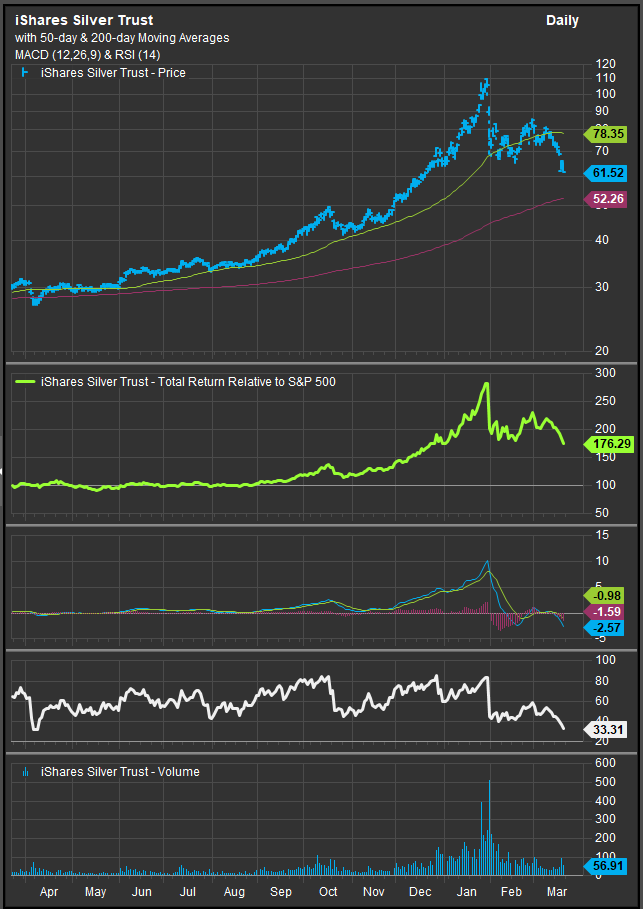
At the same time, the outflow picture is equally instructive. Broad beta vehicles such as SPY (-$37.3B) and QQQ (-$10.2B) have served as funding sources, while small caps (IWM -$2.8B) and precious metals (SLV -$3.1B) have also seen sustained pressure. This reflects a notable shift: investors are moving away from indiscriminate exposure and macro hedges toward intentional positioning across factors and themes. Thematic investing has not weakened—it has become more precise.
SLV
Nowhere is this evolution clearer than in the AI trade. The source material shows strong and persistent inflows into semiconductors and software, while more speculative or loosely defined “innovation” baskets have struggled to attract comparable capital. This aligns with broader industry observations. ETF flow data in early 2026 points to investors increasingly using semiconductor ETFs as the primary vehicle for AI exposure, favoring tangible earnings leverage over conceptual narratives. In effect, the market has shifted from “AI as a story” to “AI as an earnings cycle.”
This distinction is critical. It suggests that leadership within thematic investing is no longer determined by narrative appeal alone, but by position in the value chain. Chips, data centers, power infrastructure, and enterprise software represent the monetization layer of AI—and that is where capital is concentrating. Meanwhile, adjacent or downstream themes without clear near-term revenue realization are seeing more muted demand.
Beyond AI, the flow data also highlights the resilience of dividend, value, and quality-oriented strategies, even within a thematic framework. This trend reflects the broader macro backdrop. Investors are navigating a regime defined by elevated rates, geopolitical uncertainty, and episodic inflation shocks, and they are responding by blending structural growth exposure with income and downside resilience.
Recent industry analysis reinforces this interpretation. ETF demand in early 2026 has skewed toward sector-specific equities and core bond exposures, rather than traditional broad-market beta. At the same time, flows into long-duration bonds have increased, signaling a desire for ballast alongside equity risk. The result is a more balanced portfolio construction approach, even within thematic allocation.
The macro environment has played a decisive role in shaping these flows. The escalation of the Iran conflict and resulting volatility in energy markets have reinforced concerns around inflation persistence and supply-chain fragility. While this has supported selective interest in energy and infrastructure themes, it has not translated into a broad-based commodity allocation. Instead, investors appear to be focusing on energy security, power generation, and grid infrastructure, rather than expressing macro views through metals or raw materials alone.
This nuance is important. Energy-related themes can remain structurally supported without requiring a full commodity supercycle. In fact, the source material suggests that broad natural resources exposure remains more tactical than strategic, with flows lacking the consistency seen in AI infrastructure or dividend strategies.
Sustainable and ESG-oriented allocations also continue to attract capital, albeit in a more pragmatic form. Rather than being driven by policy or branding, these flows increasingly reflect integration into conventional investment processes, particularly around governance, efficiency, and long-term capital allocation. Recent performance in renewable and transition-related assets suggests that ESG exposure is evolving into a subset of quality and infrastructure investing, rather than a standalone theme.
Looking ahead, the key question is whether these trends will persist. The answer, in large part, is yes—but with important internal rotations.
Thematic leadership is likely to remain anchored in AI infrastructure, enterprise software, and capital-intensive enablers of digital and physical systems. These areas benefit from both secular demand and near-term earnings visibility. Similarly, dividend growth and quality tilts should continue to attract flows in a world where capital costs remain elevated and volatility persists.
However, there are areas where positioning is more likely to shift. Broad commodity exposure and certain high-beta thematic segments may continue to face headwinds unless there is a clearer inflection in global growth or monetary policy. Additionally, the market may continue to differentiate within AI, favoring “picks and shovels” exposure over thematic branding, which could further concentrate flows into a narrower subset of vehicles.
The broader takeaway is that thematic investing in 2026 is no longer driven by enthusiasm alone. It is being shaped by earnings quality, capital discipline, and macro awareness. Investors are still allocating to long-term trends—but they are doing so with a clear preference for liquidity, profitability, and structural positioning within those trends.
Thematic investing in 2026 has shifted from broad narrative-driven exposure toward disciplined allocation, with investors concentrating capital in AI infrastructure, dividend growth, and quality equities. This evolution reflects a preference for earnings visibility, resilience, and selective positioning amid macro and geopolitical uncertainty.
Sources:
- Source material: Thematic ETF flow data (YTD and recent periods, including 3/20 dataset)
- Bloomberg Intelligence – ETF flow trends and thematic allocation updates (2026)
- BlackRock iShares – ETF Landscape Reports (2026)
- State Street Global Advisors – ETF Flow Insights (2026)
- Morningstar Direct – ETF flows and thematic category analysis (2026)
- Goldman Sachs Research – Positioning, flows, and AI investment cycle commentary (2026)
- JPMorgan Asset Management – Guide to Markets / ETF flow commentary (2026)
